
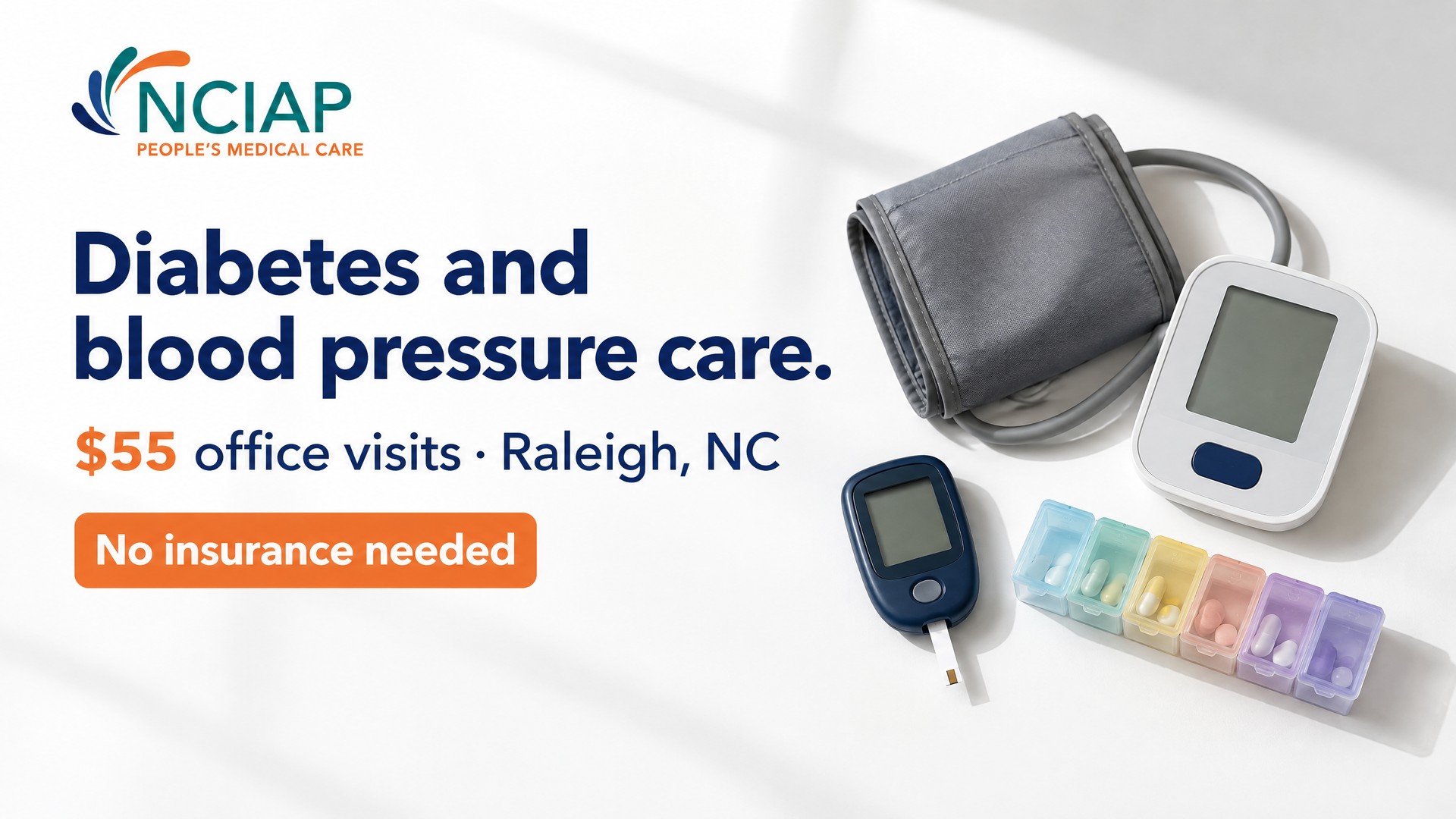
Short answer: You can get diabetes and high blood pressure care without health insurance in Raleigh, NC at NCIAP People’s Medical Care, a nonprofit clinic for uninsured and underinsured adults 18 and older. No insurance is needed: office visits are a flat $55 fee, and basic lab work starts at $35. Call (919) 277-0345 to book.
Diabetes and high blood pressure need ongoing care, and the costs add up fast without insurance. Being uninsured does not mean putting your health on hold.
Affordable primary care at NCIAP in Raleigh
NCIAP People’s Medical Care is a nonprofit clinic serving uninsured and underinsured adults 18 and older. Services include diabetes management, high blood pressure treatment, preventive care, on-site laboratory services, and specialty care by appointment, including cardiology.
Office visits are a flat $55, and health insurance is not required. Basic lab work starts at $35. Additional testing may cost extra, so ask before your visit.
What to know before you visit
- Location: 5720 Creedmoor Rd, STE 200, Raleigh, NC 27612
- Hours: Monday to Friday, 8:30 AM to 5:00 PM
- Appointments: Same-week appointments and telehealth; walk-ins welcome for select services
- Languages: Experienced, bilingual providers
- Bring: Photo ID, proof of address, and your medications or a written list
- Payment: Cash, Visa, MasterCard, and checks
Managing diabetes and hypertension without insurance
For diabetes, care may include blood sugar monitoring, A1C and other laboratory tests, medication review, nutrition guidance, and follow-up appointments.
For high blood pressure, which often causes no symptoms but raises the risk of heart disease, stroke, and kidney problems, care usually means a blood pressure evaluation, a medication review, and ongoing monitoring. NCIAP also offers cholesterol care, heart health screenings, EKGs, and cardiac risk monitoring.
If you check your blood pressure or blood sugar at home, bring those readings to your appointment.
How to save money on medication
- Ask about generic medications. Metformin for type 2 diabetes, and lisinopril or amlodipine for blood pressure, often cost less than brand names. Never change your medication or dosage without medical guidance.
- Apply for NC MedAssist. A free statewide pharmacy program for North Carolina residents with no insurance and household income up to 300% of the Federal Poverty Level. No application fee, and medications are mailed to your home.
- Check NC Medicaid. Apply through ePASS or your local Department of Social Services. New rules for adults ages 19 through 64 begin January 1, 2027.
- Getting insulin without insurance. Lilly, Sanofi, and Novo Nordisk list $35-per-month savings programs; eligibility rules apply and can change. Do not ration insulin because of cost — call your provider or pharmacist first.
- Compare pharmacy prices. Check cash prices and discount programs across pharmacies, and ask whether a longer supply is appropriate.
Which tests monitor diabetes and high blood pressure?
The CDC recommends an A1C test every 3 months if your treatment has changed or you are having trouble meeting your blood sugar goals, and every 6 months if you are meeting them. Its yearly schedule also includes kidney tests, a cholesterol test, a dilated eye exam, and a foot check.
For high blood pressure, monitoring may include repeated readings, kidney function tests, cholesterol testing, and other cardiovascular risk assessments. Ask which tests you need and what they cost.
When should you seek emergency care?
Do not delay emergency treatment because you are uninsured. Emergency departments must give you a medical screening exam, and stabilizing treatment for an emergency condition, even without insurance.
Call 911 for signs of a stroke, severe chest pain, serious breathing difficulty, or another life-threatening emergency.
- Blood pressure above 180/120 mmHg: wait one minute and recheck. If it stays that high with chest pain, shortness of breath, back pain, numbness, weakness, vision changes, or difficulty speaking, call 911. With no symptoms, contact a healthcare professional immediately.
- Blood sugar at 300 mg/dL or above with fruity-smelling breath, vomiting, or trouble breathing: call 911 or go to the emergency room. These can be signs of diabetic ketoacidosis (DKA).
- Blood sugar below 55 mg/dL is severely low. Call 911 if someone passes out, has a seizure, or is too confused to eat or drink safely.
Get emergency care first; ask about financial assistance afterward.
Frequently asked questions
Where can I get diabetes treatment without insurance in North Carolina?
In the Raleigh area, NCIAP People’s Medical Care manages diabetes for uninsured adults at a flat $55 per office visit. Elsewhere, look for community clinics that accept uninsured patients.
How much does an uninsured doctor’s visit cost in Raleigh?
At NCIAP, an office visit is a flat $55 and basic lab work starts at $35. Ask whether tests, medications, and additional services are charged separately.
Is NCIAP a free clinic?
No. NCIAP is a low-cost nonprofit clinic. Visits are a flat $55, testing may cost extra, and health insurance is not required.
Can I get diabetes medication without insurance?
Options include generic medications, prescription discount programs, manufacturer assistance, and NC MedAssist. Ask your provider or pharmacist which fit your situation.
What should I bring to my first visit at NCIAP?
A photo ID, proof of address, and your medications or a written list. New patient forms are on the NCIAP website.
Take the first step
NCIAP People’s Medical Care offers affordable primary care in Raleigh, including diabetes and hypertension management, without health insurance. Call (919) 277-0345 or visit NCIAP.org for appointments, services, and current fees.
Medical disclaimer: This article is for general educational purposes only and does not replace professional medical advice, diagnosis, or treatment. Consult a qualified healthcare professional about your individual health needs.
Sources: American Heart Association (When to Call 911 About High Blood Pressure); CDC (Your Diabetes Care Schedule; Diabetic Ketoacidosis; Treatment of Low Blood Sugar); CMS (Your Rights in an Emergency Room); HHS (The Changing Insulin Affordability Landscape); NC MedAssist (Free Pharmacy Program); NC Medicaid (Medicaid Is Changing in 2026-27).